
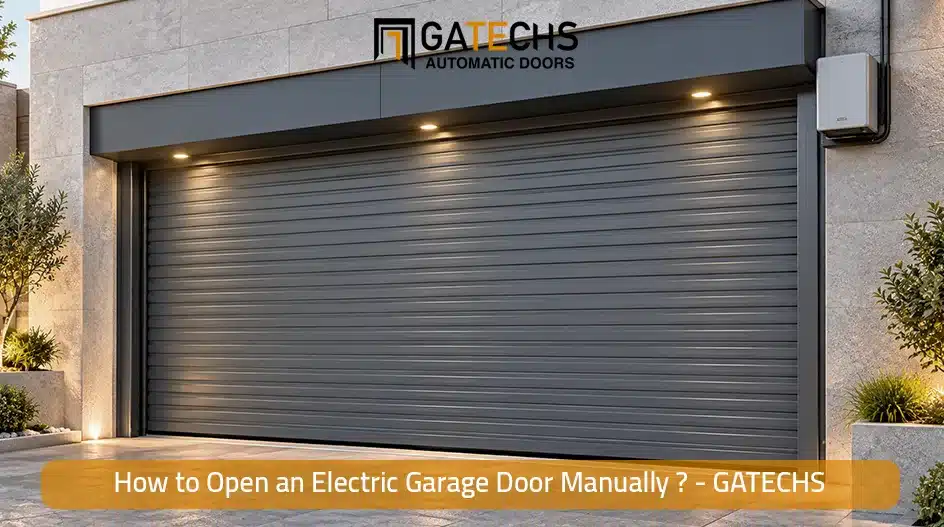
To open an electric garage door manually during a power outage, disengage the motor’s emergency release mechanism, such as a clutch release cable, manual handle, or keyed disengagement, and carefully move the door by hand. Always ensure the door is balanced and undamaged before operating it manually.
A sudden utility power cut can leave your car trapped inside the garage, creating an immediate inconvenience when heading to work or responding to an emergency. In Egypt, where power interruptions and scheduled load-shedding can occur, knowing how your entrance operates offline is an essential home safety skill.
GATECHS automatic garage door systems can be configured with manual-release mechanisms and backup-power options, depending on the selected motor and door system. This guide explains how to safely disengage the drive motor, move your door by hand, and prevent future lockouts using modern backup power solutions.
Can You Open an Electric Garage Door Without Power?
Many automatic garage door systems include an emergency manual release, but the mechanism and procedure vary by motor and door model. When disengaged, the motor’s internal gearbox no longer locks the shaft or tracks, allowing the door or gate to move manually.
A properly balanced door should remain manageable when operated manually. If the door suddenly feels unusually heavy, do not force it open. Excess weight usually indicates an issue with the counterbalance system or guide tracks rather than a simple power problem.
How to Open an Electric Garage Door Manually by Door Type
Because drive mechanisms differ across property layouts, the manual release procedure depends on your specific entrance design. Follow the tailored steps below for the three primary types of automatic garage doors:
Roller Shutter Garage Doors
Roller shutters utilize different manual release methods depending on whether they are powered by a central spring-assisted motor, a tubular motor, or an industrial side motor:
- Central Motor Release Cable (Interior Access): If you are inside the garage, locate the manual brake release cable near the motor axle. Operate the release mechanism according to the manufacturer’s instructions to disengage the brake, then lift the curtain smoothly using the bottom rail handles.
- External Keyed Release Box (Exterior Access): If you are locked outside with no secondary entrance door, locate the metal security key box mounted on the exterior wall. Unlock the box and turn the key to release the internal clutch cable, allowing the shutter to be lifted from outside.
- Manual Crank Handle (Tubular Motors): For shutters powered by tubular motors equipped with a manual override eyelet, insert the manual crank handle (manivelle) into the drive eyelet and rotate as instructed by the manufacturer to raise the curtain.
- Side Motor Hand Chain (Industrial Shutters): Heavy-duty side-mounted operators feature an integrated manual hand chain. Disengage the drive brake according to manufacturer specifications, then pull the chain hand-over-hand to raise the door.
2. Automated Sliding Garage Doors
Sliding driveway gates utilize an external operator mounted adjacent to the ground track:
- Locate the Motor Release Hatch: Find the manual release access hatch on the side of the ground-mounted motor enclosure.
- Unlock the Mechanism: Insert your personalized manual release key and unlock the access cover.
- Disengage the Drive: Operate the release lever or knob according to the manufacturer’s instructions to decouple the motor drive pinion from the steel gear rack.
- Move the Gate Manually: Push the gate steadily along its track to clear the driveway.
3. Automated Swing Garage Doors
Automated swing gates are operated by electromechanical rams or hydraulic articulated arms mounted to the side pillars:
- Locate the Operator Release Chamber: Find the keyed release chamber situated on the operator arm.
- Disengage the Drive: Insert the manufacturer-supplied release key and turn the lever to disengage the internal drive mechanism. For double-leaf gates, repeat this step on both operator arms.
- Swing the Leaves Open: Move each gate leaf carefully through its swing arc until fully retracted.
When You Should Not Use the Manual Release
Do not operate the emergency manual release if the garage door is stuck partially open or appears mechanically compromised. Disengaging the drive on an unbalanced or jammed door can cause the curtain to drop rapidly under its own weight, creating a serious hazard for vehicles and individuals nearby.
Before using the manual release, inspect the installation for these warning signs:
- Damaged Counterbalance Springs: Inspect the axle barrel or overhead spring assembly. If you notice a visible gap, separation, or broken coil, do not release the motor. The door will lack mechanical counterbalance and will be dangerously heavy.
- Frayed or Detached Cables: If a steel lifting cable is slack, disconnected, or frayed, releasing the drive can cause the door to jam sideways or fall unevenly.
- Bent Guide Tracks: If desert dust, sand buildup, or physical impact has warped the vertical guide channels, forcing the door open manually will damage the slats and axle.
What If the Garage Door Is Too Heavy to Move?
If you have disengaged the motor clutch but the door feels unusually heavy or resistant to lifting, the issue is rarely electrical.
This may indicate a problem with the counterbalance system, lifting cables, tracks, or other mechanical components. Automated motors do not lift the entire deadweight of a door unassisted; they guide movement while tempered counterbalance springs carry the bulk of the load. When a spring loses tension or breaks, the system loses its balance.
Stop attempting to lift the door immediately. Forcing an unbalanced door can lead to physical strain and risk an uncontrolled descent. Contact a qualified technical team to examine the mechanical assembly. For regular inspection advice, review our guide on garage door maintenance and repair.
Garage Door Backup Battery vs. UPS Systems
If your property experiences frequent power cuts, manual release keys and chains can become inconvenient—particularly during bad weather or late at night. Automated entrances can be upgraded with two reliable electrical backup solutions:
- Integrated Low-Voltage Battery Backups: Low-voltage DC gate operators and tubular motors can be paired with compact rechargeable battery kits. These batteries charge automatically while grid power is active and supply temporary power to complete essential open and close cycles during an outage.
- External Uninterruptible Power Supply (UPS) Units: For standard 220V AC central roller shutter motors, a compatible external UPS unit can provide automated temporary power, enabling regular remote-control operation during power failures.
A compatible UPS or battery-backup system can provide temporary power during an outage, depending on the motor’s electrical requirements and the selected backup capacity.
Want automated remote-control access even during power outages?
How to Re-Engage the Garage Door Motor When Power Returns
Once mains electricity is restored, you must securely re-couple the drive motor before operating the door automatically:
- Close the Door First: For safety and proper mechanical calibration, re-engage the drive while the door is in the fully closed position.
- Reset the Release Mechanism: Return the manual release lever, key switch, or clutch cable to its engaged position as specified in the manufacturer manual.
- Confirm Mechanical Engagement: Move or lift the door gently until you hear or feel the drive lock into the track or gear assembly.
- Test via Remote Control: Press your remote transmitter once. Observe the complete cycle to ensure the door opens smoothly and stops accurately at its limit positions.
What Causes an Electric Garage Door to Stop Working After Power Cuts?
If electricity has returned to your home but your automatic garage door remains unresponsive, check for these common post-outage issues:
- Tripped Breaker or Blown Fuse: Voltage spikes during grid restoration can trip the dedicated electrical breaker or blow the safety fuse inside the control box.
- Motor Left Disengaged: If the manual release lever was not fully reset, the motor may run without engaging the door hardware.
- Limit Switch Desynchronization: Sudden power interruptions can occasionally disrupt electronic limit positions, requiring the control board to be reset.
- Photocell Sensor Obstruction: Windblown sand or dust stirred up during an outage can cover optical safety sensor lenses, preventing the door from closing.
When Should You Call a Garage Door Technician?
While manual release systems are designed for property owner use, internal mechanical repairs and electrical troubleshooting should be handled by experienced technical personnel. Request professional assistance if:
- The door curtain appears noticeably tilted or stuck inside the guide channels.
- You hear loud popping, cracking, or grinding noises when attempting to operate the door.
- The electric motor hums or clicks without rotating the shaft.
- The manual release key or clutch cable has seized or broken.
Need Help with a Stuck or Inoperative Garage Door?
GATECHS provides professional garage door inspections, mechanical repairs, spring replacements, and automated backup battery installations across Cairo, Giza, and regional areas.
FAQ About Open An Electric Garage Door Manually
Can I open an automatic garage door from the outside without power?
If the system is equipped with an external emergency release, you may be able to disengage the motor from outside and operate the door manually. Availability depends on the motor model and installation configuration.
Why won’t my garage door stay closed after using the manual release?
Disengaging the manual release disconnects the motor’s internal holding brake. If the counterbalance springs are not in exact balance or if the manual lock has not been secured, the door may drift open slightly. Re-engaging the motor clutch restores the automated holding lock.
Can an electric garage door fall if I pull the manual release?
Yes, if you disengage the manual release while the door is open and has a broken spring or damaged lifting cable, it can drop suddenly under its own weight. Always ensure the door is closed before disengaging the drive, and keep the path underneath clear.
How does a garage door UPS work during power cuts?
A dedicated garage door UPS connects between the main power supply and the motor control board. It charges continuously during normal conditions and switches automatically to battery power during an outage, allowing normal remote-control operation without manual effort.
How do I know if my garage door spring is broken?
A visible separation or abnormal gap in the spring assembly, a loud bang from the garage, unusual door weight, or failure of the door to remain balanced during manual lifting can indicate a spring problem.