The Story of the Invention of Automatic Doors

The story of the invention of automatic doors dates back to ancient times, where it is said they were first used in Egypt in tombs. Today, these modern doors have become an essential part of daily life, seen in airports, residential areas, banks, hospitals, offices, and industrial units, playing a key role in the movement of millions of people around the world.

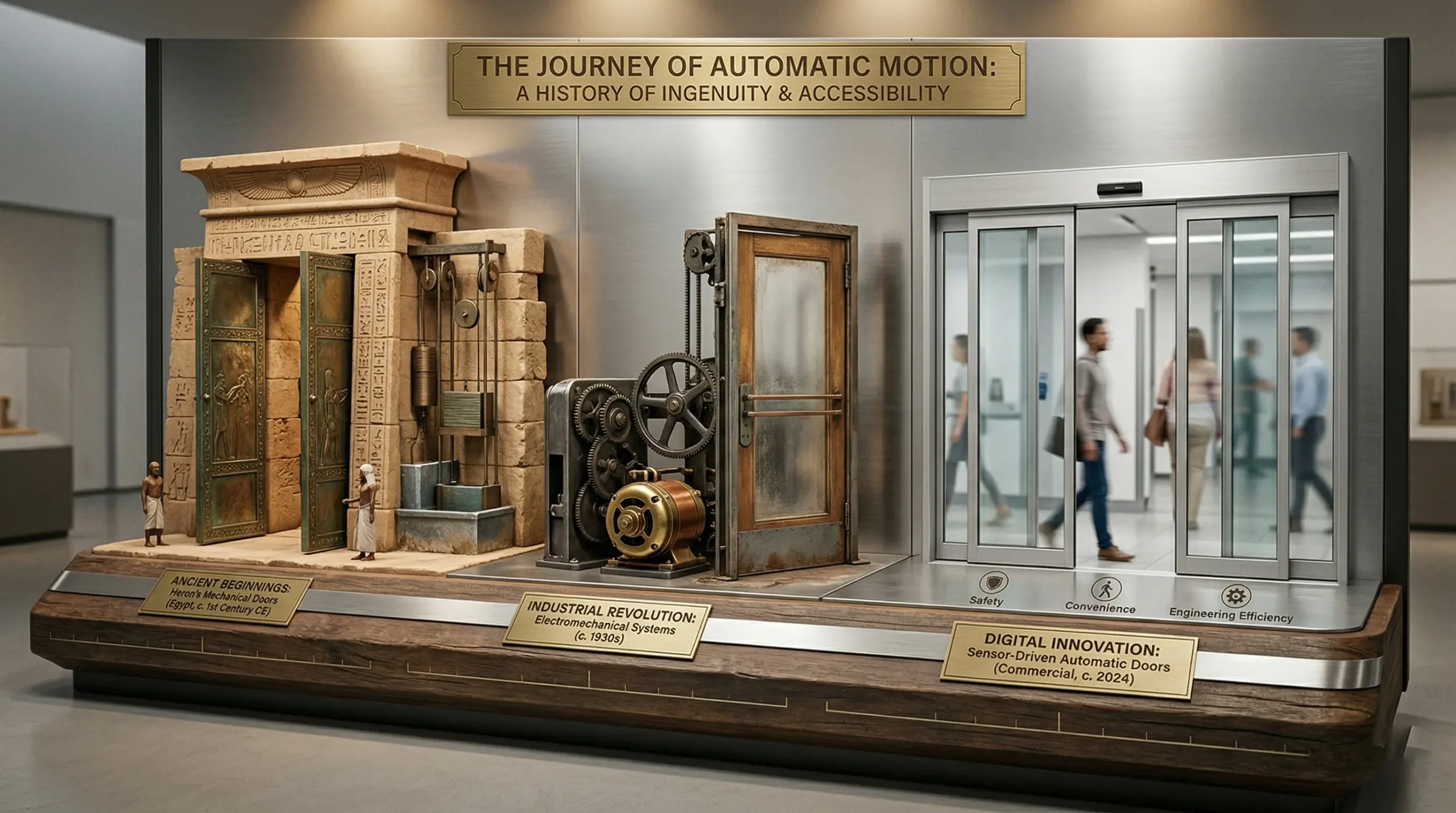
Ancient civilizations such as Egypt and Greece witnessed the early use of automatic doors. The Greeks designed them in their buildings using bronze and marble instead of wood to provide greater security and durability. While they may not have been the very first to create this type of door, their innovation of the first mechanical model in the world paved the way for the development of modern automatic doors, which are now a common feature worldwide.
“The evolution of automatic doors through the ages reflects humanity’s ability to utilize technology to simplify daily life, from ancient temples to modern smart buildings.”Technology and Engineering Experts
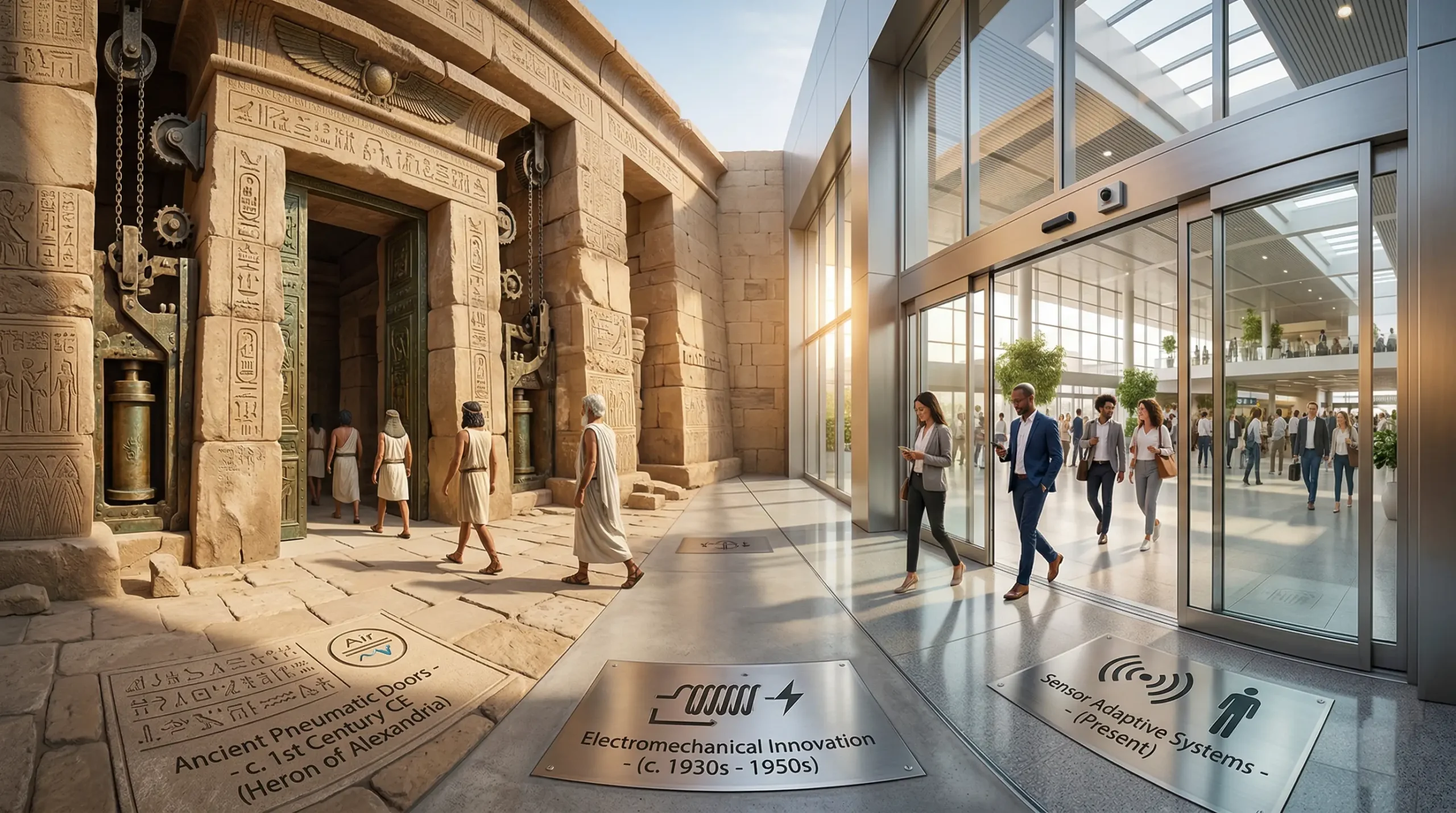
Who Invented Automatic Doors?

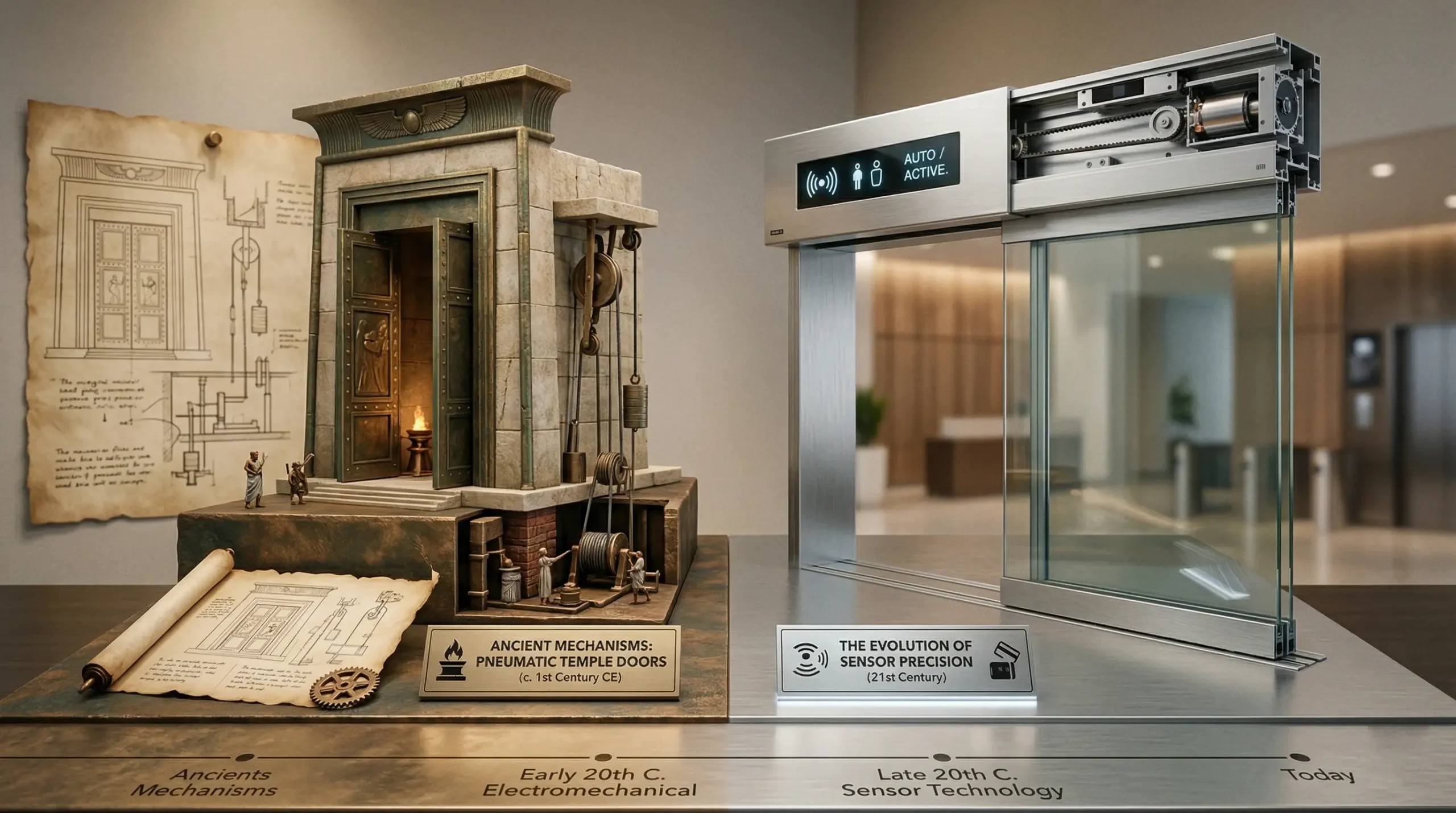
Historians believe that the first automatic door designed in a way similar to modern doors was invented by the scientist and engineer Hero (Heron) in the 1st century AD. He authored two books titled *Pneumatica* and designed a system based on ropes and pulleys, along with a hydraulic mechanism using water displacement to operate the doors of a temple in Alexandria. In the 17th century, China also used automatic doors, according to historian Joseph Needham in his book *Science and Civilization in China* (published in 1986), during the reign of Emperor Yang of Sui between 604 and 618 AD.

Modern Development of Automatic Doors

Modern advancements in automatic doors did not appear until the 20th century. In 1931, Americans Horace Raymond and Sheldon S. developed an optical device for opening automatic doors. This invention was used at Wilcox’s Pier restaurant in 1954. In the 1960s, Dee Horton and Lew Hewitt invented the first automatic door operated by a floor mat, which contributed to the widespread use of these doors in banks, hotels, and shopping centers. In the 1970s, motion sensors were developed and used to open automatic doors, greatly improving accessibility for people with disabilities. In the 1980s, automatic revolving doors appeared, and motion detection technologies became more widely adopted. In the 1990s, touch-activated automatic doors were introduced, and with continuous technological advancements, these doors have become widely used around the world.
  • Early beginnings in ancient civilizations such as Egypt and Greece.
  • Hero’s invention of a rope- and hydraulic-based system in the 1st century AD.
  • Modern development in the 20th century using optical devices and sensors.
  • Global spread of automatic doors thanks to motion and sensing technologies.

Automatic Glass Doors

Automatic glass doors are among the most widely used types of modern doors today, having evolved over nearly half a century. In their early stages, they were somewhat complex, but thanks to technological advancements and modern innovations, they have become easy to operate and install, making them an ideal choice for many commercial and service facilities.

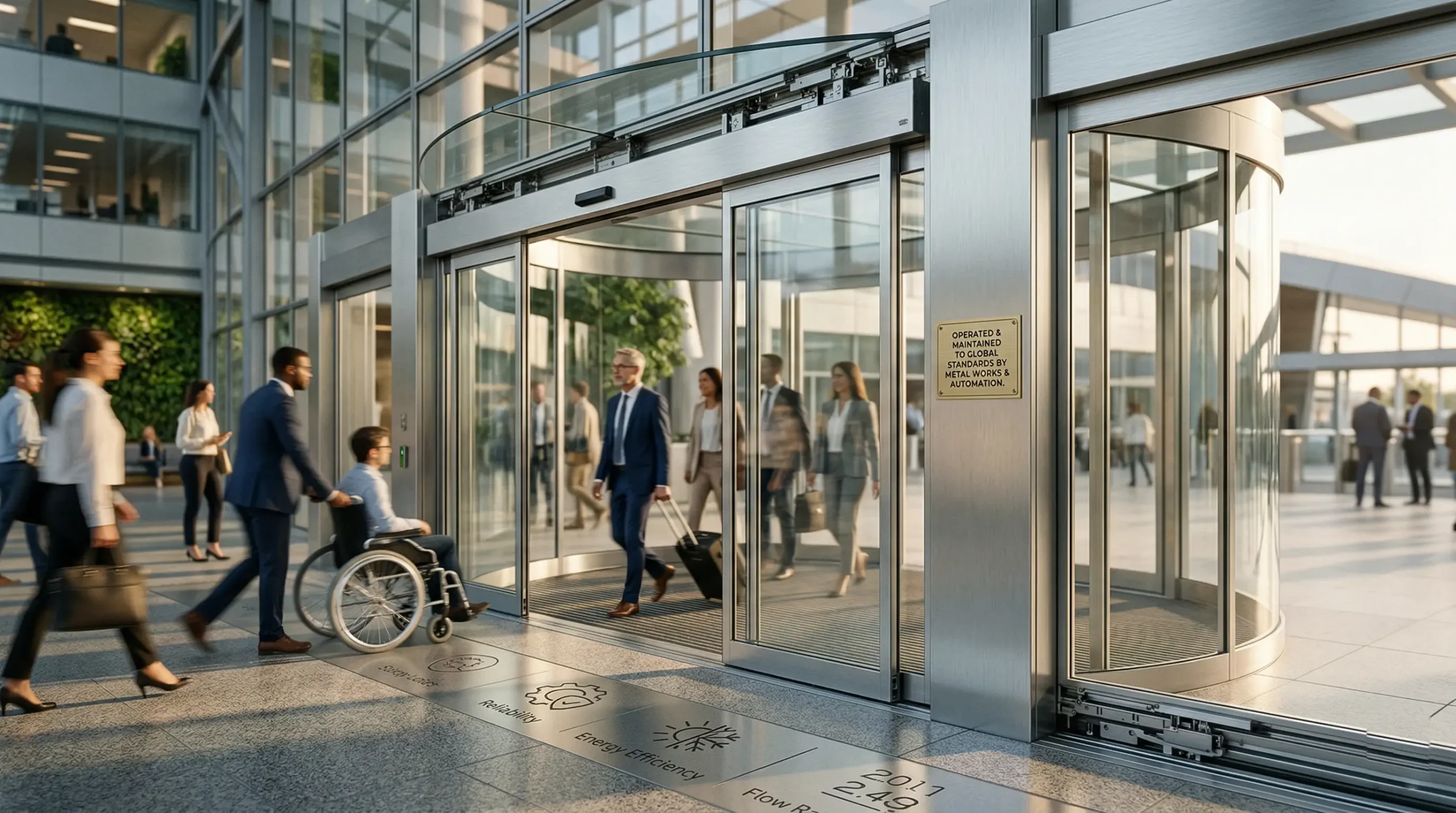
Automatic glass doors are made of aluminum and tempered glass (securit), which is considered one of the purest types of glass, allowing clear visibility through it. Customers can choose from multiple glass colors such as blue, pink, brown, or green, as well as other types like reflective glass, laminated glass, or custom frosted glass. These doors are commonly used in entrances of malls, shopping centers, hotels, retail stores, showrooms, banks, airports, companies, restaurants, hospitals, and other places that require efficient automatic entry and exit solutions.
“Automatic glass doors offer a perfect blend of elegance and functionality, giving buildings a modern appearance while ensuring ease of movement, safety, and operational efficiency.”Automatic Door Experts

How Automatic Glass Doors Work

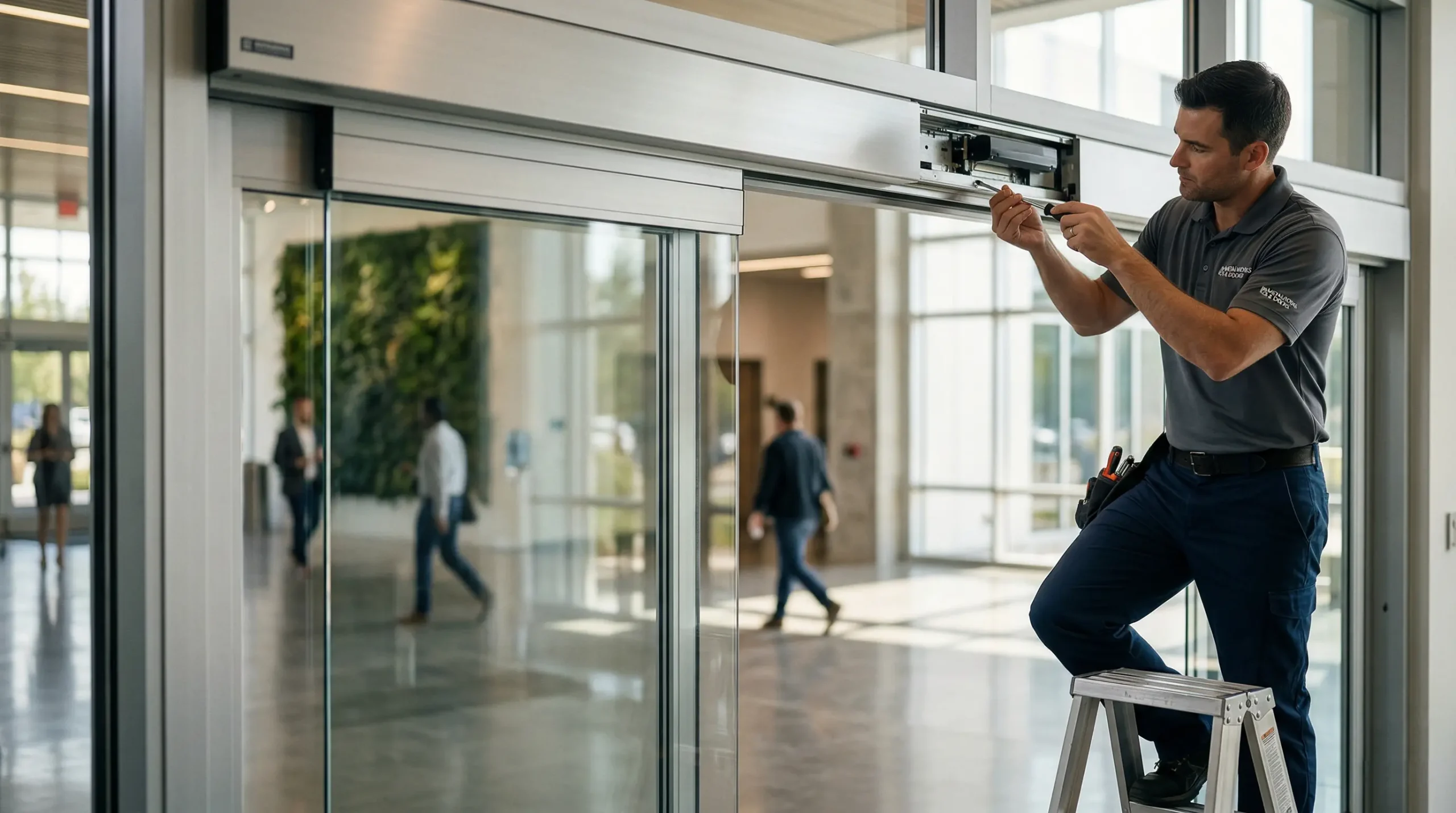
Automatic glass doors regulate the process of entering and exiting a building. They can consist of a single leaf, double leaves, or four panels depending on the allocated space, and they open and close horizontally like sliding doors. The operating systems include radar devices or advanced sensors that control the opening and closing process automatically. Among the most common are infrared sensors that detect motion or temperature changes near the door. When a person or object approaches, the sensor sends a signal to the automatic door operator to begin opening or closing smoothly and safely.

Features of Automatic Glass Doors

Automatic glass doors offer a high level of transparency and clear visibility, making them ideal for environments that rely on natural lighting. They are also highly resistant to wind and high temperatures thanks to the thickness and strength of the glass, and they provide good sound insulation, helping maintain indoor cooling and reduce energy consumption.
  • A modern and elegant appearance that enhances the building’s façade and gives a professional impression.
  • Smooth and quiet operation thanks to motion systems and frames designed to reduce friction.
  • High safety in case of breakage, as the glass shatters into small, non-sharp pieces.
  • Ability to add access control systems such as card or fingerprint based on client needs.

Automatic Glass Door Motors

The automatic glass door motor operates at 110/220 volts and can be controlled via a remote control upon client request at an additional cost. The motor includes three automatic operating modes, in addition to a manual mode in case of power outage. The motor casing is made of aluminum, while the mechanical parts, control unit, and optical components are made of heat-resistant materials to ensure efficiency and durability. The motor is also equipped with an infrared optical lens to manage opening and closing operations, and it includes a sensor with an automatic reverse feature when encountering obstacles during operation. This enhances safety, protects users, and extends the lifespan of the system.