
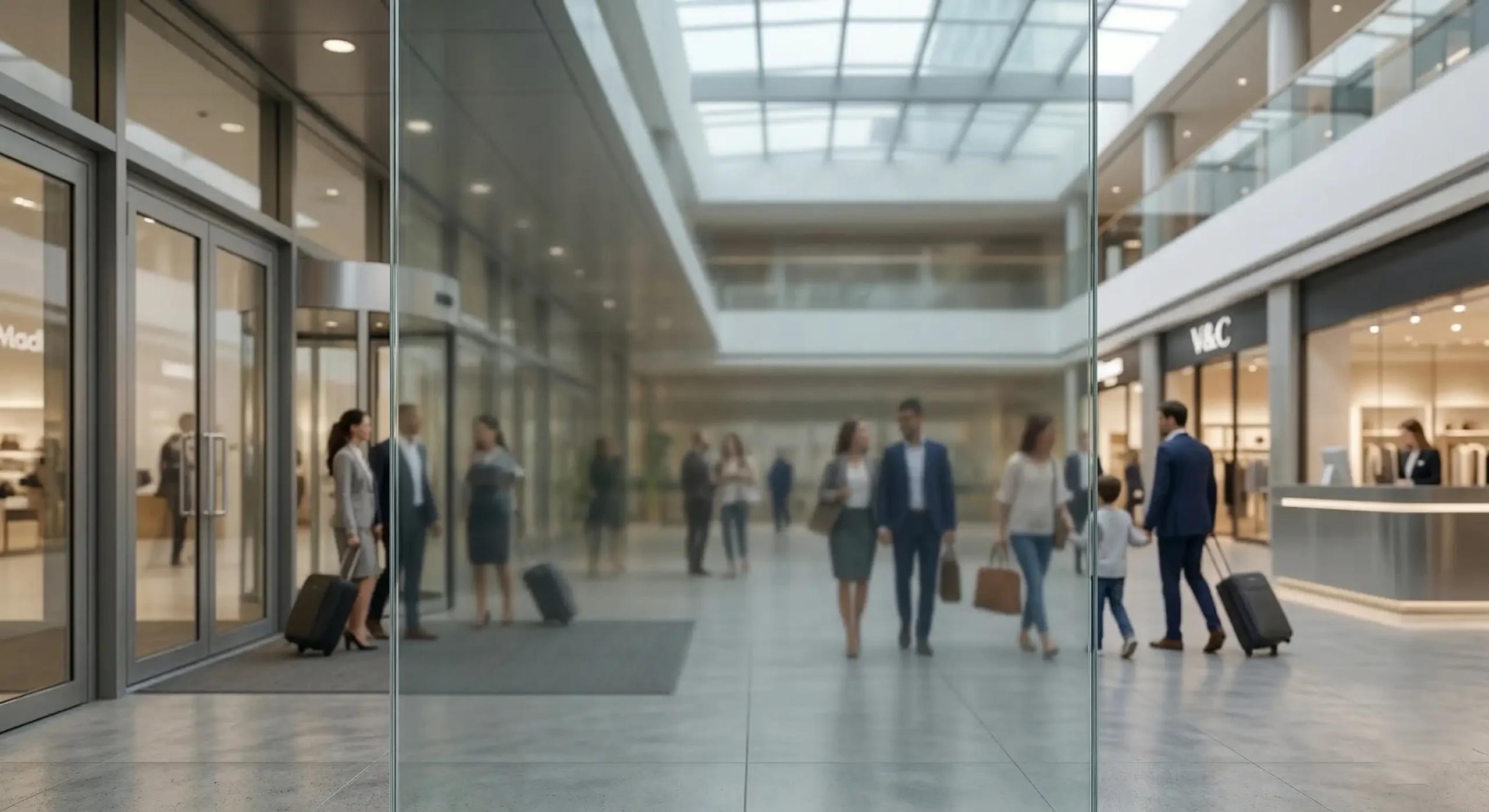
Automatic revolving doors have helped many companies and individuals since 1888. The main reason for the popularity of this type of door is that it allows people to enter and exit simultaneously with ease and smoothness, making this innovation highly sought after in public and commercial buildings.
Automatic revolving doors quickly became widespread in society, companies, and government institutions. Some may think that this type of door hasn’t changed over the years, but in reality, modern technology has significantly developed it by adding many advanced features and techniques. Different types have emerged, such as glass revolving doors and automatic doors, which have become common in modern buildings.
“Automatic revolving doors are not just an entrance to buildings; they are a smart solution that combines security, organization, and energy efficiency with an elegant design that reflects the professionalism of the place.”Automatic Door Experts
Evolution and Purpose of Automatic Revolving Doors
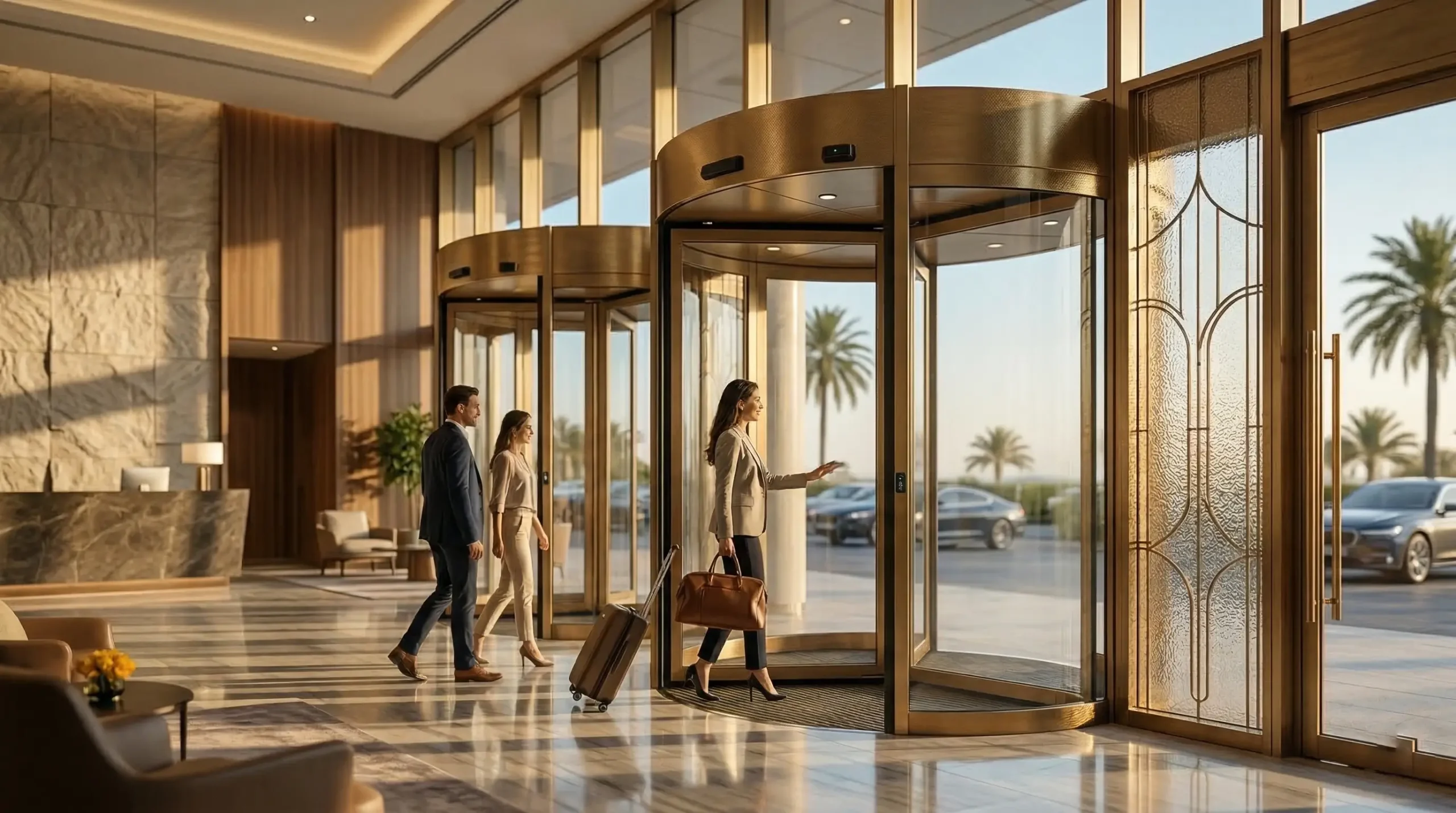
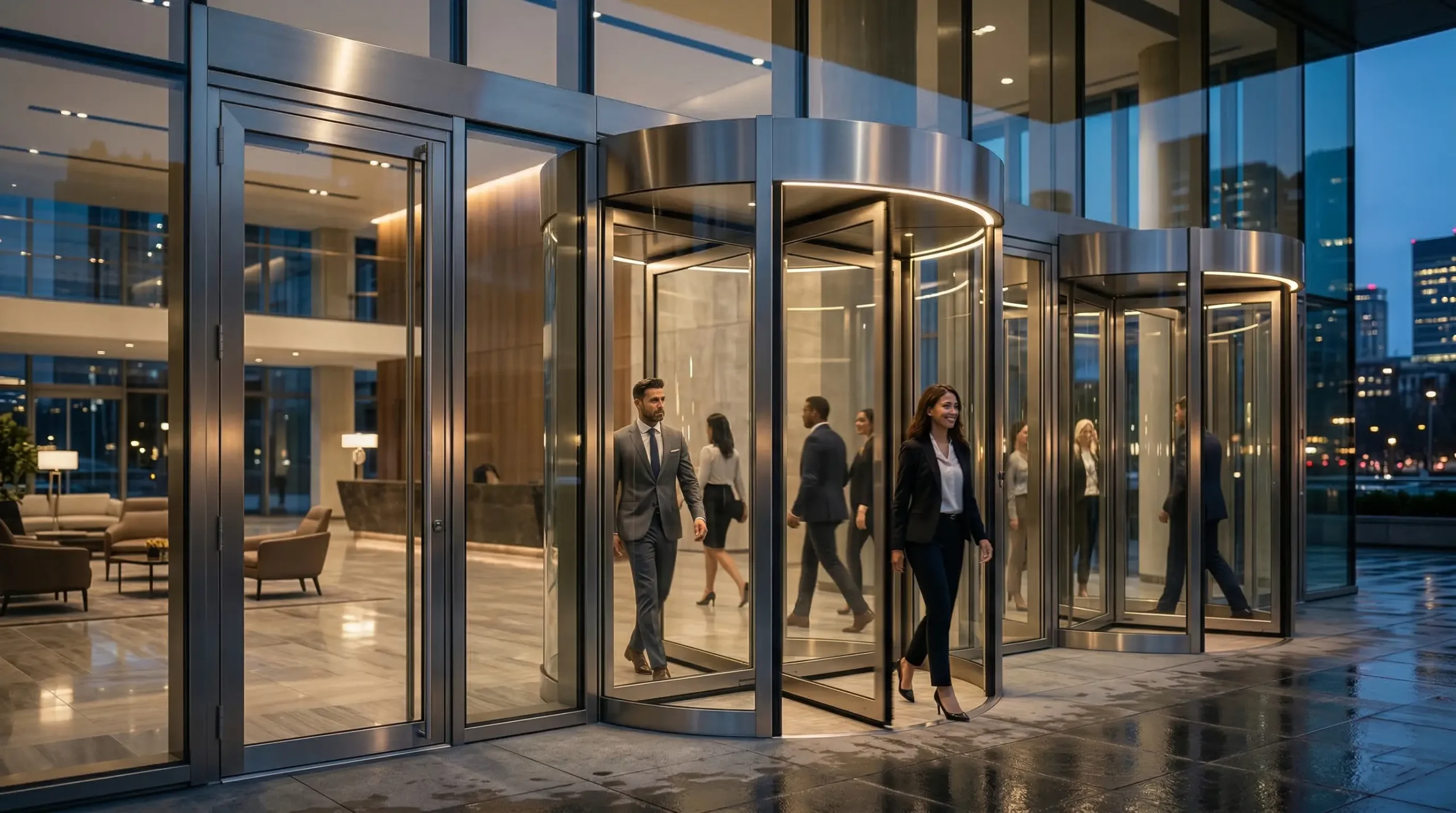
The history of revolving doors can be traced back to the 1880s, when a patent was granted in Germany to H. Bockhacker in 1881, and they later appeared in the United States in 1888. Since then, these doors have evolved significantly thanks to modern technology and are now used in buildings, offices, shopping centers, stadiums, and amusement parks. They provide organized entry and exit, while reducing the impact of external elements on buildings.
- Helps reduce noise inside buildings.
- Organizes the flow of people entering and exiting, reducing collisions.
- Minimizes the effects of weather, such as wind and heat.
- Helps maintain indoor temperature.
Automatic revolving doors offer many important benefits for modern buildings. They add an elegant appearance that reflects the professionalism of the institution and help reduce electricity consumption by maintaining indoor temperature, reducing the need for heating or air conditioning. They also allow more natural light to enter, minimizing the use of artificial lighting. In addition, these doors help limit dust entry and organize the flow of people inside the building. In some cases, they can enhance security by controlling entry and exit, while standard doors should also be available nearby for emergency use.